What Is Payment API? 5 Essential Types, Benefits, and Tips
I remember the thrill of setting up my first online store in 2017, selling handmade crafts. The biggest hurdle wasn’t making the products or building the website, but figuring out how to accept payments. I wasn’t a banking expert; I just wanted my customers to pay with their credit cards easily and securely. That’s when I first discovered the utility of a “payment API.” It felt like a key to a complex financial world, making it simple to plug payment processing right into my corner of the internet. It transformed my hobby into a real business, letting me focus on crafting instead of worrying about secure transactions.
In today’s digital economy, seamless and secure payment processing is crucial. From online shopping to subscription services, the ability to manage payments electronically is a fundamental requirement. At the heart of this capability lies the payment API—which stands for Application Programming Interface. An API is a set of rules that allows different computer programs to talk to each other. A payment API is a powerful set of these rules that enables your website or app to communicate directly with payment processors. These interfaces allow businesses to integrate sophisticated payment functions directly into their platforms, eliminating the need to build complex payment infrastructure from the ground up.
A payment API acts as a digital bridge, facilitating the secure transmission of sensitive financial data between merchants, customers, and financial institutions. This communication typically happens through standardized requests and responses, often using common formats like REST or SOAP. By handling the complex parts of payment processing, these systems empower developers to embed various payment methods—including credit and debit cards, digital wallets, and bank transfers—into their applications through a single connection point. The impact of this technology on the financial world is significant, as shown by the global payment gateway market, which was valued at $26.66 billion in 2023 and is projected to reach $192.56 billion by 2033. This growth highlights how essential these tools are in modern commerce.
As Will Gaybrick, Chief Product Officer at Stripe, highlighted, this technology has made financial infrastructure accessible to everyone, allowing any developer to add advanced payment features that once required years of banking connections and complex legal knowledge. This perspective emphasizes how these interfaces have created a more level playing field, allowing more businesses to join the digital economy. By providing a streamlined and secure way to handle transactions, payment APIs are not just a technical component; they are a strategic asset that allows for innovation and growth across many industries. They let businesses focus on their core services while specialized providers manage the intricate details of payment processing, ensuring efficiency and compliance.
Types of Payment APIs
The world of payment interfaces is diverse, with various types designed to address specific business needs. Discover the different categories that can help businesses choose the right tools for their operations, whether they are processing standard online payments, facilitating international transfers, managing subscriptions, or seeking a comprehensive solution. Each type of interface offers specialized functions that cater to particular aspects of the payment ecosystem, from security and compliance to currency exchange and recurring billing.

What is a Payment Gateway API?
A payment gateway interface serves as a crucial intermediary in the digital payment process. Imagine it as a secure digital post office that handles sensitive payment information between your website and the bank. Its primary function is to encrypt and transmit transaction data, ensuring sensitive information is protected as it travels from the customer to the involved banks. This type of API is responsible for authorizing and settling card payments in real-time, making it an absolute must for any business accepting credit or debit card transactions online. Without a robust gateway solution, merchants would struggle to securely process card payments and manage the complexities of financial data exchange.
The functions performed by a payment gateway are extensive and critical for secure and efficient payment processing. These include encrypting card data to protect it from unauthorized access, setting up fraud detection mechanisms to identify and block fraudulent transactions, and ensuring compliance with the Payment Card Industry Data Security Standard (PCI DSS). A key security feature commonly used is tokenization, which replaces sensitive card data with non-sensitive, unique placeholders called “tokens.” This significantly reduces a merchant’s PCI compliance scope because they are not directly handling actual card numbers.
Dr. Avinash Collis, a researcher specializing in digital payment systems at Carnegie Mellon University, has emphasized the importance of these gateways. He stated that they serve as the critical security layer in digital commerce, performing real-time risk assessment and encryption that protects billions of transactions annually while maintaining sub-second response times. This highlights the dual role of gateway interfaces: providing robust security and ensuring rapid transaction processing, which is essential for a smooth customer experience. Major providers in this space include Stripe, PayPal/Braintree, Authorize.Net, and Adyen, with authorization requests typically receiving a response within 1-3 seconds.

What is a Cross-Border Payment API?
A cross-border payment interface is a specialized tool designed to facilitate international transactions, allowing businesses to send and receive payments across different countries and currencies. This type of system is particularly complex because it must handle currency conversion, navigate intricate regulations across multiple countries, and route payments through various international banking networks. For businesses operating globally, a cross-border solution is essential for expanding market reach and streamlining international financial operations. It simplifies what would otherwise be a highly complicated process involving multiple banks and financial intermediaries.
The regulatory landscape for cross-border payments is exceptionally challenging, requiring these systems to comply with numerous international frameworks. These include SWIFT for interbank messaging, anti-money laundering (AML) regulations, and Know Your Customer (KYC) requirements. Beyond compliance, these tools excel at managing the financial details of international trade. They typically support a wide array of currencies and are capable of dynamic currency conversion (DCC), which allows customers to pay in their local currency. They also handle foreign exchange (FX) rate calculations and multi-currency settlement.
Christine Lagarde, President of the European Central Bank, noted the transformative impact of this technology. She explained that modern cross-border solutions are revolutionizing international finance by reducing settlement times from days to near-instantaneous transfers while cutting costs significantly compared to traditional banking. Leading providers in this sector include Wise API, Payoneer API, Stripe Global Payments, and Rapyd. The continuous development of these interfaces is making global trade more accessible and affordable for businesses worldwide.

What is a Unified Payment API?
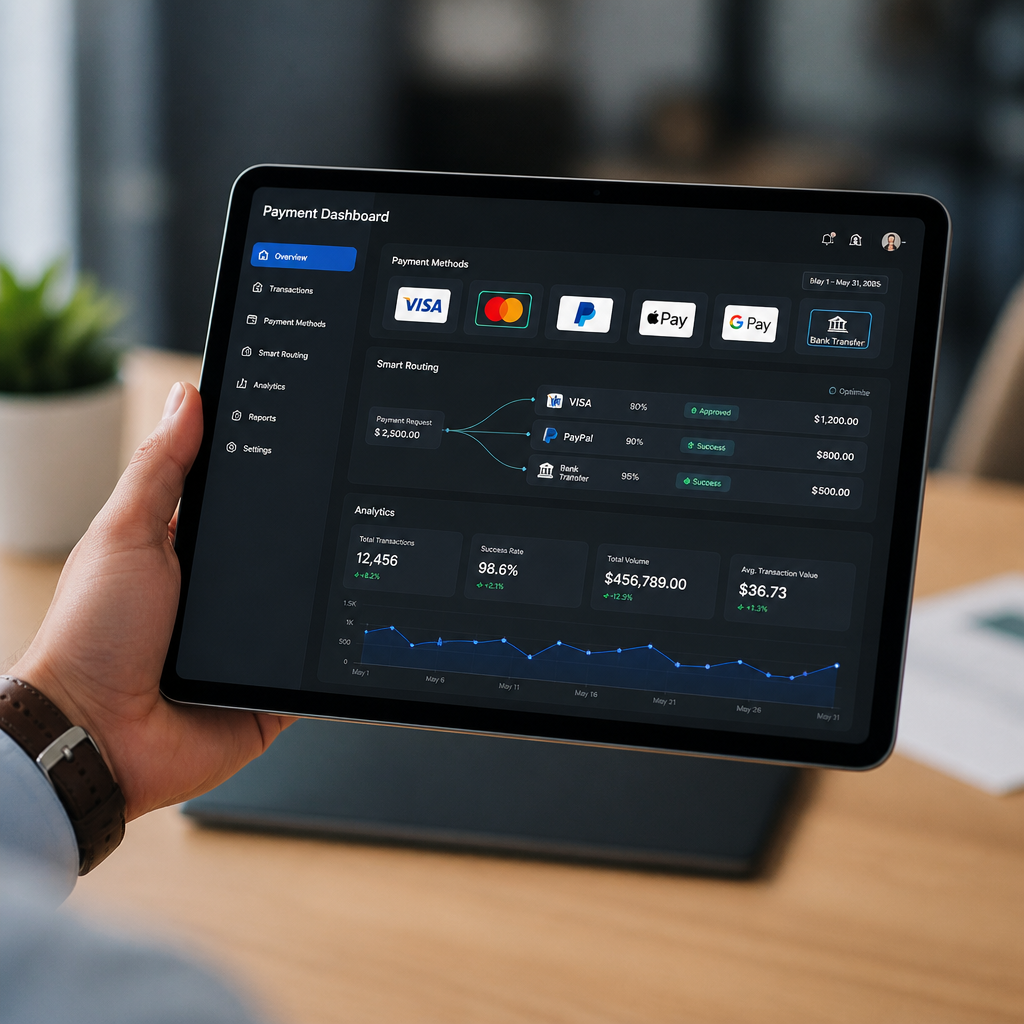
A unified payment interface represents an advanced evolution in payment processing. It offers a single point of integration to access multiple payment methods, processors, and gateways simultaneously. This innovative approach means businesses do not need to integrate with each payment provider individually, which significantly simplifies the technical work and management associated with offering diverse payment options. For businesses aiming to streamline their payment infrastructure and enhance the customer experience, a unified solution can be a strategic asset, consolidating various payment functions into one cohesive system.
One of the key advantages of a unified interface is its ability to aggregate a wide array of payment methods through a single, standardized endpoint. This includes traditional cards, digital wallets, bank transfers, “buy-now-pay-later” (BNPL) options, and various local payment methods. Furthermore, unified platforms often include smart routing capabilities. These systems automatically direct transactions to the optimal payment processor based on factors like success rates, cost, and geographic location, which helps businesses maximize payment success and minimize operational costs.
Patrick Collison, CEO and co-founder of Stripe, stated, “Unified payment APIs represent the evolution from fragmented payment infrastructure to a cohesive ecosystem, allowing businesses to optimize payment routing, reduce failed transactions by 15-20%, and increase authorization rates through intelligent payment orchestration.”
This expert insight highlights the strategic benefits of adopting a unified approach. By leveraging this technology, businesses can achieve greater flexibility, better control over their payment flows, and a more resilient system that can adapt to various challenges.
What is a Recurring Payment API?
A recurring payment interface is a specialized tool designed to automate subscription-based and periodic billing processes. For businesses that rely on a subscription model, such as SaaS companies, streaming services, or membership platforms, this type of system is essential. It securely stores customer payment details, schedules automatic charges at predetermined intervals, and efficiently manages the entire subscription lifecycle. This automation frees businesses from manual billing tasks, allowing them to focus on customer acquisition and retention while ensuring a predictable revenue stream.
Beyond simple scheduling, recurring billing solutions offer a suite of advanced subscription management functions. These include proration calculations for plan changes, dunning management systems to handle failed payments gracefully, and automated processes for updating customer payment methods. These features are crucial for minimizing involuntary churn, which occurs when subscriptions are canceled due to payment issues rather than customer choice. By implementing features like automatic card updaters and smart retry logic, these systems can reduce involuntary churn significantly.
Tien Tzuo, founder and CEO of Zuora, has explained that these interfaces are the backbone of the subscription economy, enabling businesses to reduce payment failure rates through intelligent retry mechanisms and real-time payment method updates. Major providers in this space include Stripe Billing, Recurly, Chargebee, and Braintree Recurring Billing. To maintain PCI DSS compliance, these systems must securely store payment credentials using tokenization or vaulting, ensuring recurring payments are both convenient and protected.

What is a Secure Payment API?
A secure financial interface is fundamentally designed to protect sensitive financial data throughout its entire lifecycle—during transmission, processing, and storage. It achieves this by implementing a comprehensive set of security measures, including strong encryption, tokenization, advanced fraud detection, and strict adherence to industry standards such as PCI DSS, PSD2, and GDPR. For any business handling financial transactions, the security of its interface is paramount. _A breach can lead to significant financial losses, damage to reputation, and severe legal consequences._
Central to the security of these systems is compliance with PCI DSS Level 1 certification, the highest security standard for entities processing large volumes of cardholder data. Essential security features include TLS 1.2+ encryption for data in transit and AES-256 encryption for data at rest. Tokenization plays a critical role by replacing actual card data with non-sensitive tokens, significantly reducing risk exposure. Furthermore, secure interfaces often incorporate 3D Secure 2.0 for enhanced customer authentication and use real-time fraud detection systems powered by machine learning algorithms.
Beyond encryption, secure systems implement various controls to prevent unauthorized access. These include rate limiting to stop brute-force attacks, IP whitelisting to ensure access only from approved addresses, and webhook signature verification to confirm that incoming notifications are genuine. Additionally, strong API key rotation policies are often enforced, requiring regular updates to minimize vulnerability if a key is compromised. These proactive security measures are crucial for maintaining the integrity of payment data in an increasingly complex threat landscape.

Payment API Integration
Integrating a payment API into a business’s existing systems is a fundamental step toward enabling digital payment capabilities. This process involves more than just plugging in code; it requires careful planning, technical execution, and thorough testing to ensure seamless functionality and robust security. A successful integration allows a business to fully leverage the power of payment APIs, connecting the business’s internal logic with external payment infrastructure.

What is an API Payment Integration?
API payment integration is the technical process of connecting a business’s software application, website, or platform to a payment service provider’s API. This connection enables your application to programmatically send payment requests, receive transaction responses, and manage various payment workflows. Essentially, it teaches your system how to “talk” to a payment processor, allowing for automated and real-time financial interactions. This integration is crucial for any digital business, as it forms the bridge between a customer’s intent to pay and the actual transfer of funds.
The process of integration typically involves four core steps:
- Obtain API Credentials: A business must get public and private keys from the payment service provider. These are vital for authenticating requests and ensuring secure communication.
- Implement Authentication: Mechanisms such as OAuth 2.0 or API keys are necessary to verify the identity of the application making the requests.
- Make API Calls: This involves sending REST or SOAP requests to transmit transaction data and receive responses from the payment processor.
- Handle Webhooks: Webhooks are essential for receiving asynchronous event notifications, such as payment confirmations or refund statuses, allowing your system to react in real-time.
Common integration methods vary, including server-side integration for maximum control, client-side integration using JavaScript SDKs for faster implementation, and mobile SDKs for native iOS and Android applications. The average integration timeline can vary from 1-2 weeks for basic payment acceptance to 6-12 weeks for a full subscription management system.
Kamran Zaki, Chief Technology Officer at Adyen, explained, “Successful API payment integration requires balancing three critical factors: security through proper credential management and PCI compliance, user experience through optimized checkout flows that maintain 2-3 second load times, and reliability through proper error handling and retry logic that accounts for network failures and timeout scenarios.”
This expert advice highlights that technical implementation must align with security, user satisfaction, and system resilience. Rigorous testing is also paramount, involving sandbox environment testing and validating PCI DSS compliance _before deploying to a live production environment._

Choosing the Best Payment API
Selecting the right payment interface is a strategic decision that can significantly impact a business’s operational efficiency, customer satisfaction, and growth. With a multitude of providers and specialized API types available, there is no one-size-fits-all solution. The “best” choice is subjective and depends entirely on the unique needs, scale, and objectives of a particular business. Careful consideration of various factors is essential to make an informed choice.

What is the Best Payment API for My Business?
Determining the optimal interface for a business hinges on a comprehensive evaluation of several business-specific factors. These include anticipated transaction volume, required geographic coverage, preferred customer payment methods, industry, available technical resources, and budget constraints. A small local e-commerce store will have vastly different needs compared to a global software provider that sells subscriptions.
For small businesses and startups, providers like Stripe and Square often present an excellent balance of features and accessibility, with transparent pricing and quick integration. In contrast, enterprise businesses may find more value in platforms like Adyen and Braintree, which offer volume-based pricing, dedicated account management, and advanced fraud prevention tools.
| Feature | Small Business / Startup (e.g., Stripe) | Enterprise Business (e.g., Adyen) |
|---|---|---|
| Pricing Model | Flat-rate (e.g., 2.9% + $0.30) | Interchange++ / Custom volume-based |
| Integration Time | Quick (typically 1-2 weeks) | More involved, tailored solutions |
| Support | Standard support, extensive documentation | Dedicated account management |
| Key Benefit | Ease of use, transparent pricing | Advanced features, lower rates at scale |
For international businesses, providers such as Stripe, PayPal, and Adyen offer the most comprehensive geographic reach and support for local payment methods. As Forrester Research analyst Lily Varon advised, businesses should evaluate providers across six dimensions: total cost of ownership, payment method coverage, authorization rates, integration complexity, compliance support, and vendor stability.

What is the Best Payment API for Developers?
For developers, the best interface is often defined by its ease of use, the quality of its supporting resources, and the flexibility it offers for custom integrations. Evaluation criteria include the comprehensiveness of documentation, the consistency of the API design, the availability of Software Development Kits (SDKs), the robustness of the sandbox environment for testing, and the strength of community support. An interface that excels in these areas can significantly reduce integration time and effort.
Stripe consistently receives high marks among developers for its exceptional developer experience. This reputation is built on extensive documentation with numerous code examples, SDKs for over 10 programming languages, an interactive API reference, and a highly active developer community.
Jeff Lawson, CEO of Twilio, articulated the core principles of a developer-friendly interface, stating that the best ones prioritize comprehensive documentation, well-designed SDKs that abstract complexity, and responsive developer support. Critical developer features that enhance the integration experience include webhook testing tools, detailed error messages, robust versioning strategies to prevent breaking changes, and idempotency key support to prevent duplicate charges. Essential resources like interactive API explorers, Postman collections, and active developer forums further streamline the integration process.

What is the Best ACH Payment API?
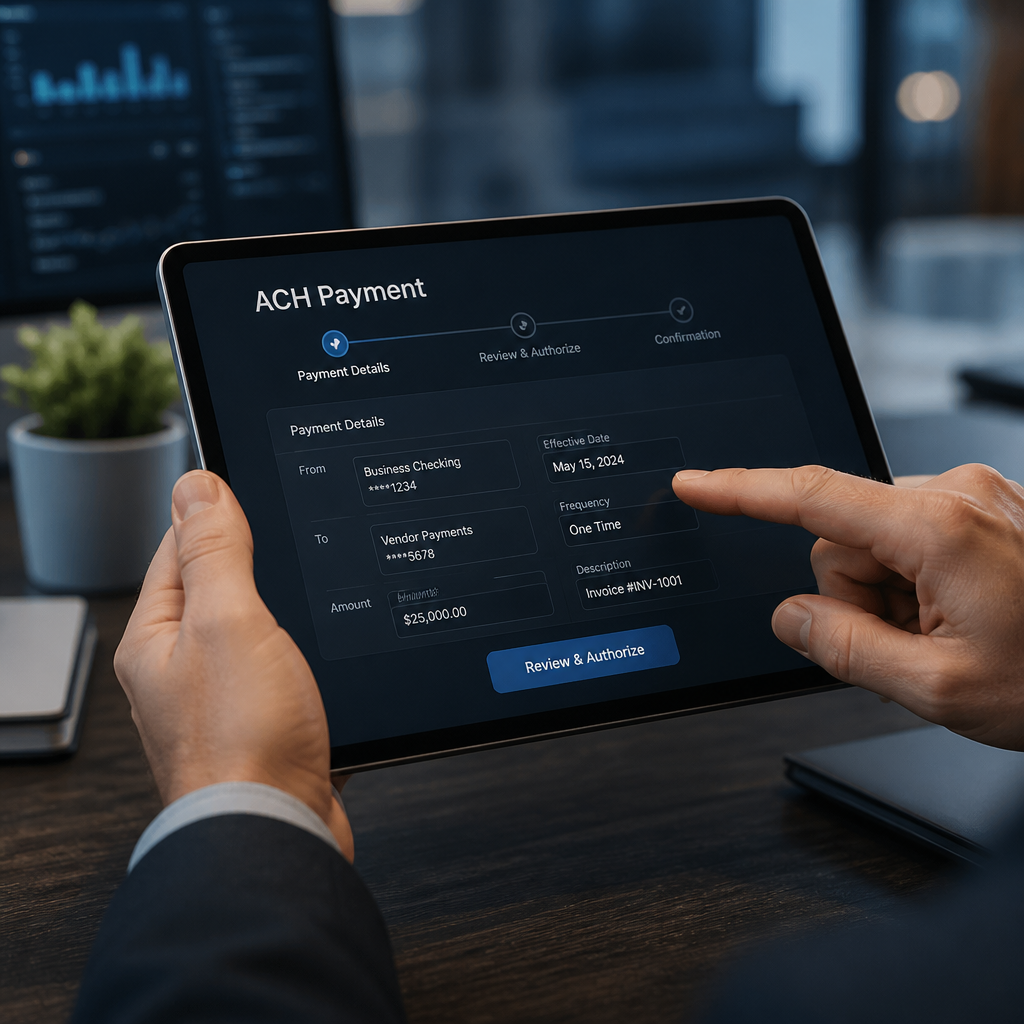
An ACH (Automated Clearing House) payment interface is a specialized tool designed to facilitate electronic bank-to-bank transfers within the United States. These transfers include both direct debits and direct credits and are ideal for businesses that handle large-value transactions, recurring payments, or prefer lower processing costs compared to credit cards. _All transfers are governed by the strict operating rules set forth by NACHA, the organization that manages the ACH network._
One of the most compelling advantages of ACH is its significantly lower transaction costs, often a flat fee or a small percentage capped at a few dollars, compared to the typical 2.9% + $0.30 for credit card processing. This cost efficiency makes ACH an attractive option for optimizing payment expenses. Leading ACH solution providers include Stripe ACH, Dwolla, Plaid, and Authorize.Net.
ACH processing timelines vary. Standard transfers typically settle within 3-5 business days, while Same Day ACH allows for same-business-day settlement for transactions up to $1 million. Bank account verification can also impact timelines, with instant verification via services like Plaid Link being much faster than traditional micro-deposit verification. As Jane Larimer, CEO of Nacha, noted, modern interfaces have transformed the ACH network, with Same Day ACH volume growing significantly, driven by applications that make ACH as convenient as card payments. Key selection criteria for the right ACH solution include verification methods, settlement speed, pricing structure, and support for NACHA rule compliance.
FAQ
Q1: What is the primary benefit of using a payment API for a business?
A1: The primary benefit is that it allows businesses to accept, process, and manage digital payments directly within their own platforms without needing to build complex payment infrastructure from scratch. This makes advanced financial capabilities accessible, streamlines operations, enhances security, and enables businesses to offer a wider range of payment methods.
Q2: How do payment gateway APIs ensure the security of online transactions?
A2: Payment gateway APIs ensure security through multiple layers of protection. They encrypt sensitive card data during transmission, implement fraud detection mechanisms, and comply with strict industry standards like PCI DSS. Many also use tokenization, which replaces actual card numbers with non-sensitive tokens, reducing the merchant’s security burden.
Q3: What makes a cross-border payment API different from a standard payment API?
A3: A cross-border payment API specializes in international transactions by handling complexities like currency conversion, dynamic foreign exchange rate calculations, and compliance with diverse legal regulations across multiple countries (e.g., SWIFT, AML, KYC). It routes payments through international banking networks, often reducing settlement times and costs.
Q4: For developers, what are the key features to look for when choosing a payment API?
A4: Developers prioritize comprehensive and accurate documentation, consistent API design, availability of SDKs for different programming languages, robust sandbox environments for testing, reliable webhooks, and strong community support. Features like detailed error messages and idempotency keys are also highly valued for efficient integration.
Q5: Why might a business choose an ACH payment API over a credit card payment API?
A5: A business might choose an ACH payment API primarily for its significantly lower transaction costs, which are ideal for high-value or recurring payments. ACH APIs also offer direct bank-to-bank transfers and often have lower failure rates compared to credit cards, though standard settlement times can be longer.

Hi, I’m Anna Smith, the founder of API Dev Note.
I’m an API specialist with experience working with APIs, integrations, and web development. Through hands-on projects, I’ve learned that understanding how APIs work in real-world environments is just as important as reading the documentation.